A district with a name that says it all
Isola means "island", and for a long time it really was one: a working-class district cut off from the rest of the city by the railway tracks and the Martesana canal, reachable by just a few bridges and overpasses. That isolation made it a world of its own, with a strong identity, courtyard tenements, craft workshops, osterias and a community where everyone knew each other by name. Today Isola is one of the liveliest districts in Milan, but it has kept much of that character.
Between past and skyscrapers
Over the last twenty years, right next to Isola, the Porta Nuova district has risen, with the tallest buildings in Italy, Piazza Gae Aulenti and the Bosco Verticale. The contrast is the best thing about the area: from narrow streets lined with balconies you look up and see glass towers and trees on terraces. For a high-rise aperitivo with a view of the skyscrapers there is our site about rooftops in Milan.
The atmosphere
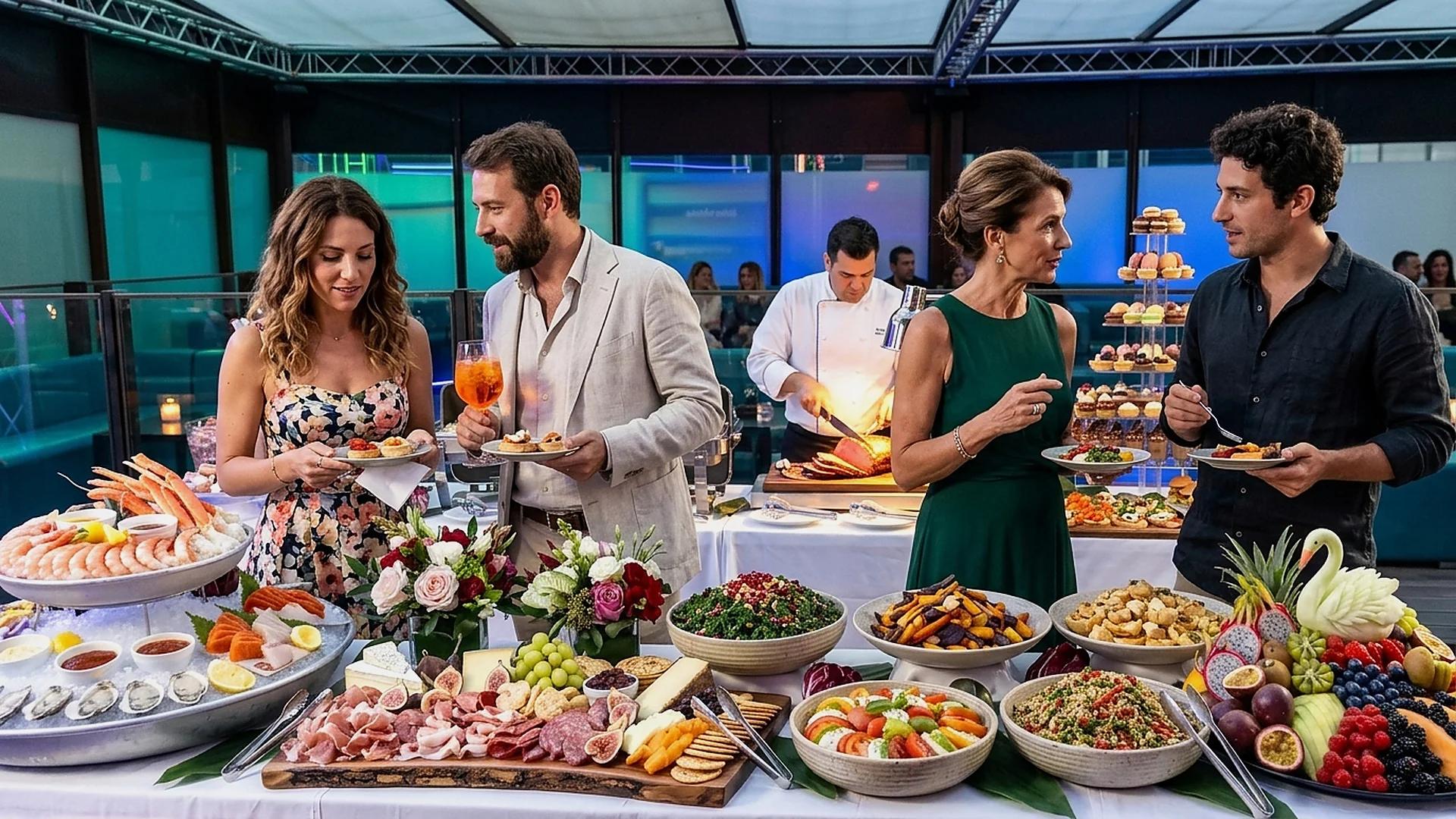
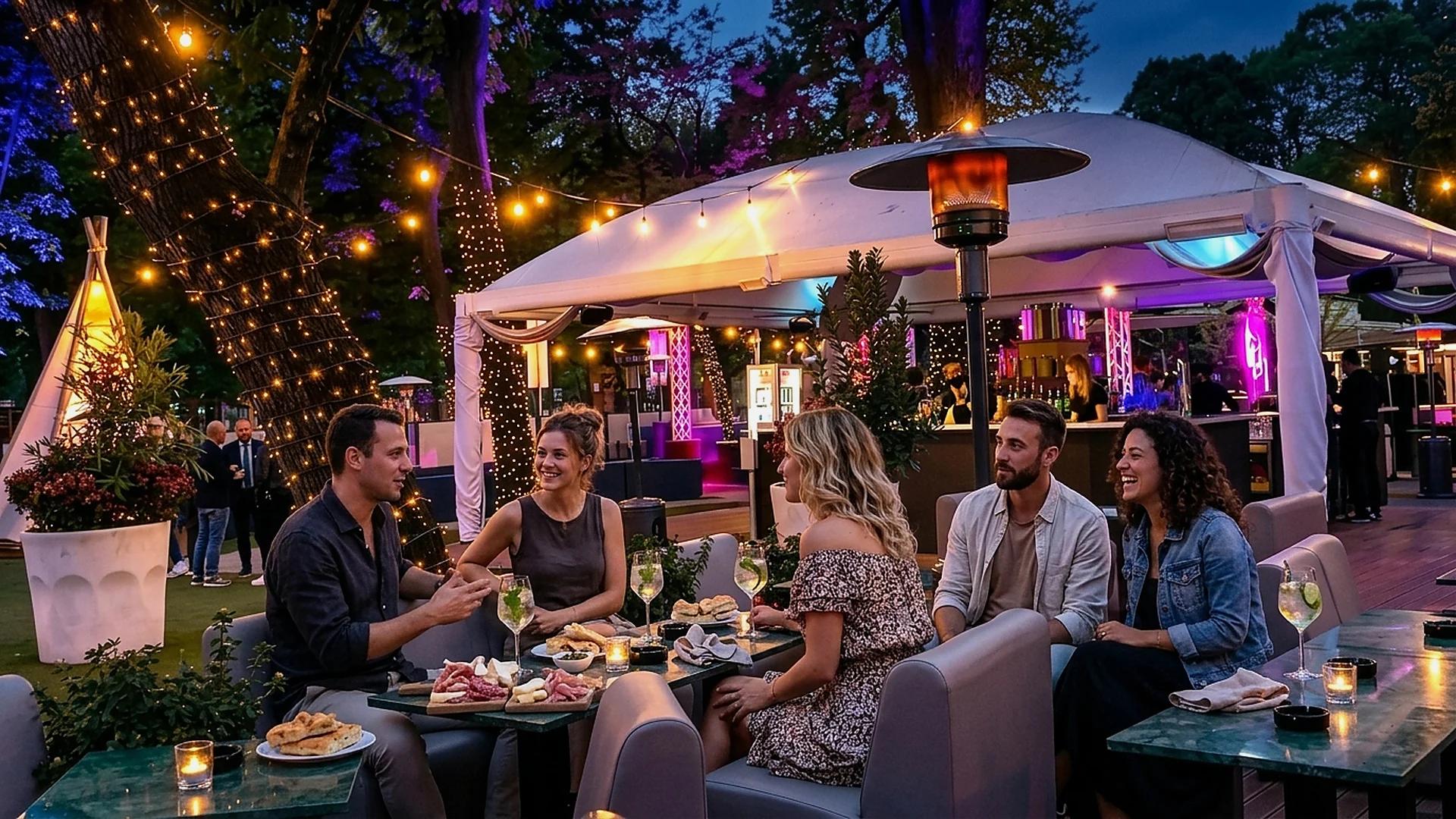
Aperitivo in Isola is relaxed and local. People sit at tables in the street, stand at the counter or perch on the steps of a square. The crowd is mixed: residents, young professionals from the Porta Nuova offices, creatives, students. There is neither the crush of the Navigli nor the polish of Brera: it sits nicely between the two.
Streets to know
Via Borsieri
One of the district's main streets, with bars, restaurants and venues. At number 37 is the Blue Note, the jazz club that opened in 2003 as the first European outpost of the historic New York club: for music lovers, an aperitivo in the area can turn into a concert.
Via Thaon di Revel and Via Pastrengo
Streets with many neighbourhood places, trattorias and bars with a few tables outside. In the evening they fill up with people moving from one spot to the next.
Piazzale Segrino
A small tree-lined square and one of the district's meeting points. It is ringed by bars and venues, and in summer it stays lively until late.
Via Pollaiuolo and Via Confalonieri
On the edge of the district, towards Garibaldi station and Porta Nuova, there are more modern venues, popular with people leaving the offices in the nearby towers.
| Street or square | Atmosphere | Best for |
|---|---|---|
| Via Borsieri | Lively, with music | Aperitivo then a concert |
| Via Thaon di Revel | Local | Drinks with friends |
| Piazzale Segrino | Tree-lined square | Summer evenings |
| Towards Porta Nuova | Modern | After-work drinks |
When to go
After work
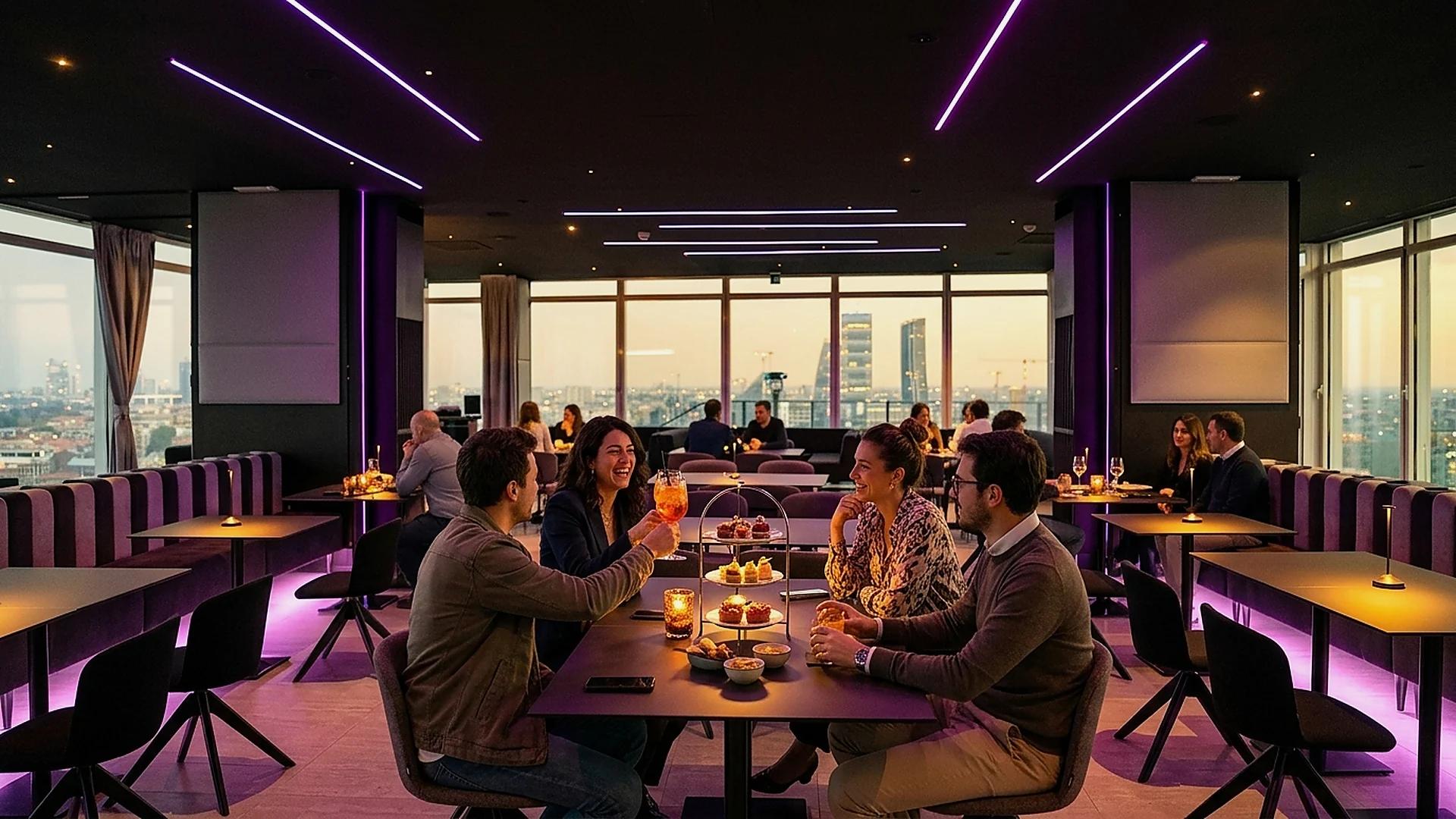
From Tuesday to Thursday, around half past six, Isola fills with people leaving the offices of Porta Nuova and Garibaldi. It is the time for a quick aperitivo at the counter or at a table outside.
At the weekend
On Fridays and Saturdays the aperitivo stretches out and turns into dinner in the district's trattorias and restaurants. The streets stay busy until late.
In summer
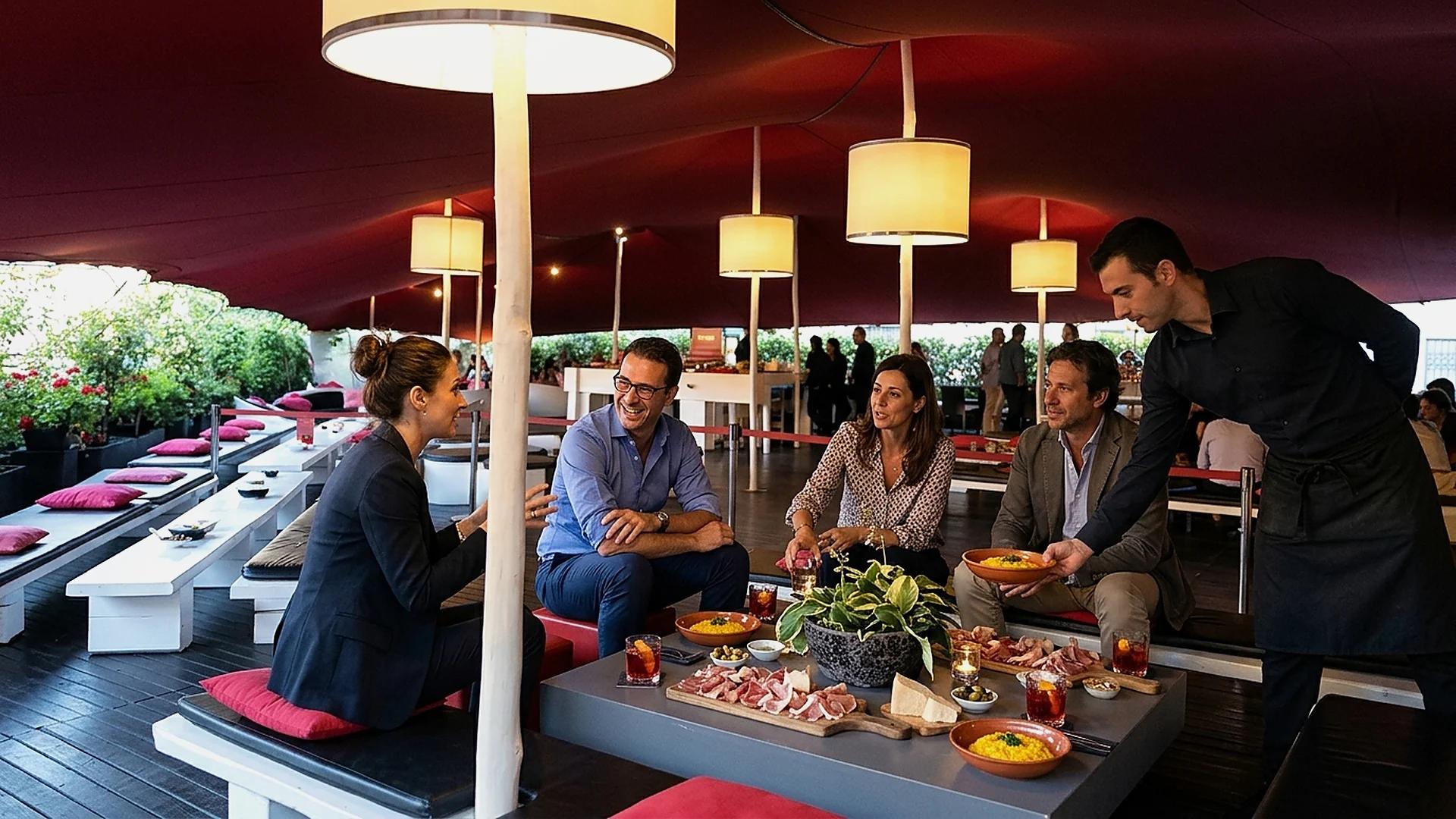
In summer the outdoor tables multiply and the squares become the centre of the evening. The district also has a more relaxed feel than other nightlife areas, with fewer tourists.
Getting there
Metro
The Isola stop on the lilac M5 line is in the heart of the district. Garibaldi FS, on the M2 and M5 lines, is a few minutes' walk away. From Gioia on the M2 you can walk through Porta Nuova.
Train
Porta Garibaldi station, also served by the Malpensa Express and the suburban rail link, is a few minutes' walk away. For anyone arriving in Milan by train, Isola is one of the most convenient districts for an aperitivo.
By car
Isola's streets are narrow and parking in the evening is difficult. There are underground car parks in Porta Nuova. If you can, take the metro.
What to see before the aperitivo
The Bosco Verticale and the Biblioteca degli Alberi
A short walk from Isola are the Bosco Verticale, the two tree-covered towers designed by Stefano Boeri's studio, and the Biblioteca degli Alberi, the park between the skyscrapers. A walk before the aperitivo shows you contemporary Milan.
Piazza Gae Aulenti
The raised square surrounded by the Porta Nuova towers, with its fountains, is one of the most photographed places in the city. You cross it on foot coming from Isola towards Corso Como.
Courtyard tenements and murals
In the inner streets of the district you can still see the courtyards with the balconies of the case di ringhiera, typical of working-class Milan, and plenty of murals on the walls. It is a different Milan, worth looking at.
After the aperitivo
Dinner in the district
Isola has trattorias, osterias, pizzerias and contemporary restaurants. Many Milanese have their aperitivo and stay for dinner in the same street.
Live music
For those who want to carry on with music there is the Blue Note, with jazz, soul and blues concerts, and other venues with live music in the district. To choose the right place there is our site about bars and lounges in Milan.
Towards Corso Como
A few minutes' walk away is Corso Como, home to some of the best-known clubs in the city. For nights out in clubs there is our site about Milan nightclubs.
Aperitivo in Isola for a group
Groups of friends
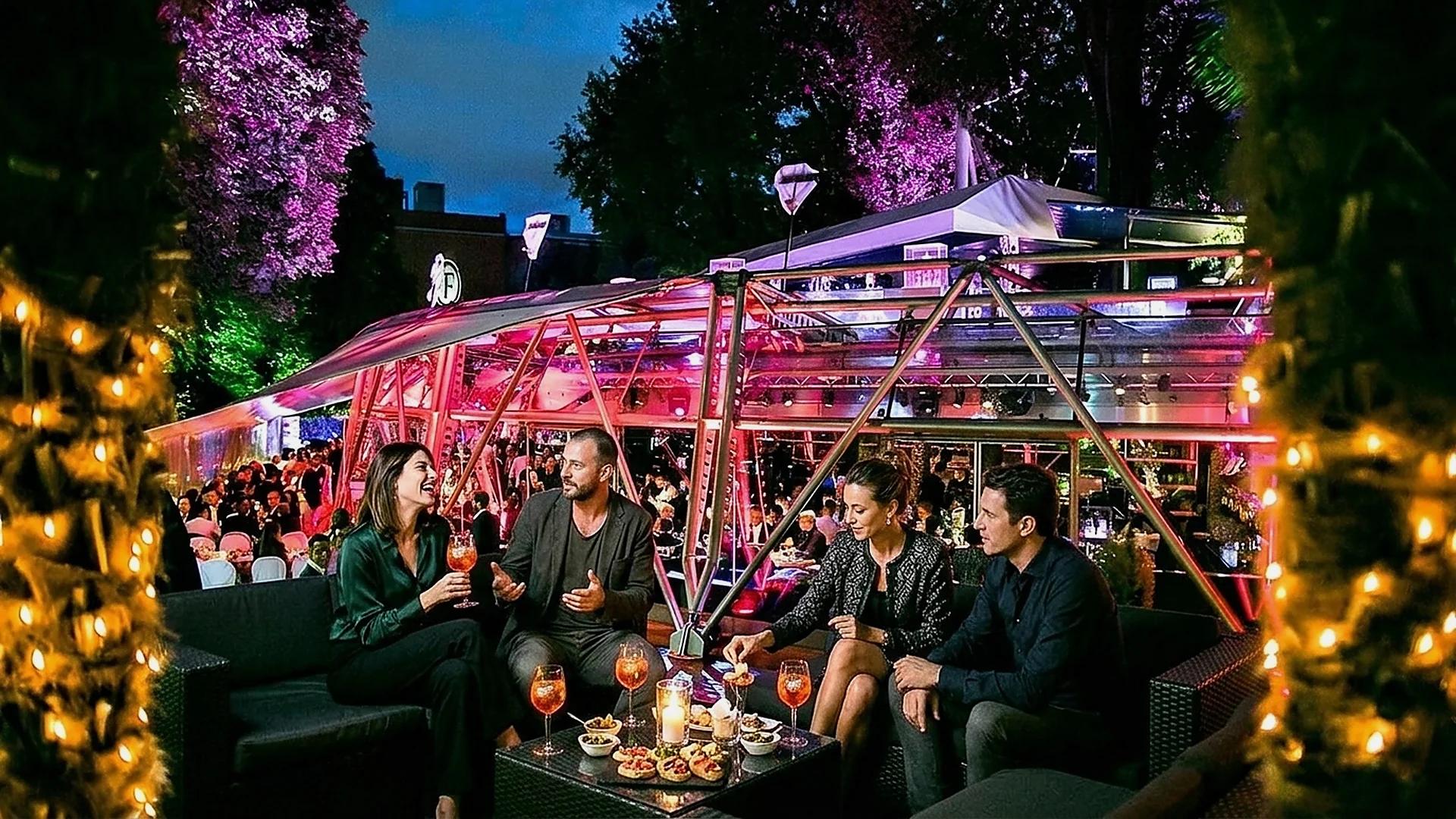
Isola's venues are often small, so for a group of more than eight people it is best to book. Many venues offer formulas with drinks and nibbles or a small buffet. All the formulas are on our page about the group aperitivo.
Colleagues
For companies in Porta Nuova and Garibaldi, Isola is the most convenient district for drinks with colleagues: you can walk there from the office. For a company aperitivo with a reserved area and an invoice there is our page about aperitivo services.
A little history of the district
Isola was born as a working-class district between the nineteenth and twentieth centuries, when factories, workshops and homes for their workers sprang up around the railway. The courtyard tenements, with the balconies onto which the flats opened and shared facilities, are the mark of that working Milan. The district was separated from the centre by the tracks and by the Martesana canal, which ran where Via Melchiorre Gioia is today. For decades Isola had a reputation as a tough area; in the nineties and 2000s it became a place for artists, craftspeople and creatives, and then, with the building of Porta Nuova, one of the most sought-after districts in the city.
Isola and design
During Milan Design Week, in April, Isola hosts one of the Fuorisalone districts, with exhibitions, installations and events in shops, courtyards and spaces around the neighbourhood. In those days the aperitivo happens between one installation and the next, with an international crowd of designers and visitors. It is one of the liveliest moments of the year, and venues are very crowded: groups must book well in advance.
An evening in Isola, hour by hour
Around half past six you arrive at Isola station or walk from Garibaldi, perhaps after a stroll through the Biblioteca degli Alberi with a view of the Bosco Verticale. Between seven and half past eight, the aperitivo, at the tables of Via Thaon di Revel or Piazzale Segrino. Around nine, dinner, in a district trattoria or a contemporary restaurant. After dinner, for music lovers, a concert at the Blue Note in Via Borsieri; for those who want to dance, a few minutes' walk to Corso Como. Getting back is easy: the lilac and green metro lines are close by.
What to drink in Isola
The district's bars offer a wide range: from the neighbourhood bar with its Spritz and Campari soda to the cocktail bar with signature drinks, from beer bars with craft beers to wine bars with natural wines. If you want the Milanese classic, order a Negroni or an Americano; if you want to experiment, sit at the counter and let the bartender guide you.
Isola for people working in Porta Nuova
For professionals working in the Porta Nuova towers and the offices around Garibaldi station, Isola is the natural after-work district. You cross the Biblioteca degli Alberi or go under the overpass, and in five minutes you are in another Milan, made of neighbourhood bars and trattorias. Many local companies choose Isola's venues for drinks with colleagues, farewells and end-of-project parties. For a group of colleagues, book a few days ahead, especially on Thursdays, the busiest evening.
Isola with children
In the late afternoon and at weekends Isola is also popular with families. The Biblioteca degli Alberi, with its lawns and play areas, is close by, and after an afternoon in the park many parents stop at a local bar for an aperitivo while the children play in the square.
Tips for visitors
Isola is easy to reach from Malpensa: the Malpensa Express stops at Porta Garibaldi, a short walk away. The aperitivo here is less touristy than around the Duomo, and you are more likely to drink among locals. Remember that in Italy you often pay at the counter, and that tipping is not expected. Dinner starts later than in many countries, from about half past seven or eight.
Isola in winter
In winter the aperitivo in Isola moves indoors, into bars that become warm and full of soft light. The district's streets stay lively, especially from Thursday to Saturday, and the contrast between the low, lit-up houses and the Porta Nuova skyscrapers glowing in the night is one of the loveliest sights of winter Milan. Around Christmas the district puts up its lights, and Piazza Gae Aulenti, a short walk away, often hosts decorations and events. A warm drink in a bar on Via Borsieri after a stroll among the lights of Porta Nuova is a perfect way to spend a December evening.
Prices and formulas in Isola
Aperitivo prices in Isola are on average lower than in Brera and the centre and similar to those of the Navigli. Many neighbourhood bars serve the drink with nibbles; some venues offer formulas with a small buffet, especially on weekdays. The district's signature cocktail bars charge more, justified by the quality of the drinks. For a comparison of the price ranges see our guide on how much an aperitivo costs.